Sigiriya Lion Rock, Sri Lanka: Complete 2026 Guide
Everything about Sigiriya Lion Rock: location, tickets, opening hours, the climb, frescoes and history, plus how to get there with a private driver.

Essential Takeaways:
- Arrive right at 6:30 AM to beat the intense heat and large tourist crowds.
- Bring plenty of water—there are no shops once you pass the main entrance.
- Wear comfortable, grippy shoes for the steep metal stairs.
- Dress respectfully (shoulders and knees covered) as it is a site of historical and cultural significance.
- Beware of the resident monkeys; do not feed them or rustle plastic bags, as they might snatch your belongings.
Sigiriya Lion Rock – The Complete Guide to Sri Lanka's Rock Fortress
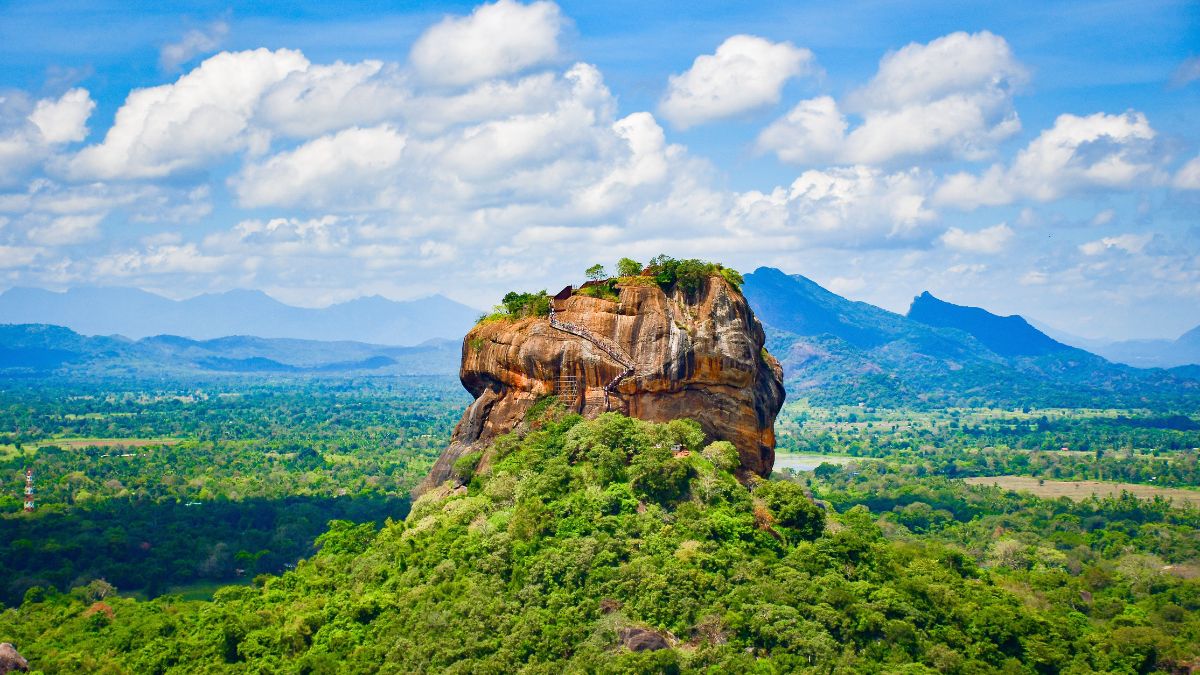
Rising majestically from the central plains of Sri Lanka, Sigiriya Lion Rock is arguably the most dramatic and awe-inspiring historical site on the island. This massive column of granite, towering nearly 200 meters (660 feet) above the surrounding lush jungle, is not just a natural wonder but a masterpiece of ancient urban planning, engineering, and art. Known locally as the eighth wonder of the world, Sigiriya rock is a UNESCO World Heritage site and an absolute must-visit destination for anyone traveling to Sri Lanka.
The sheer scale of the Sigiriya rock fortress is breathtaking. As you approach the site through the symmetrical royal gardens, the monolith dominates the horizon, evoking a sense of wonder at how ancient builders managed to construct a lavish palace and fortress complex at its summit. The site seamlessly blends nature with human ingenuity, featuring complex hydraulic systems, terraced gardens, and stunning works of art that have survived for over a millennium and a half.
Whether you are a history buff, a nature lover, or an adventure seeker, the Sigiriya climb offers something extraordinary. From the enigmatic Sigiriya frescoes that adorn the rock face to the highly polished Mirror Wall and the monumental Lion's Paws that guard the final ascent, every step of the journey up this ancient monolith tells a story of ambition, betrayal, and architectural brilliance.
In this comprehensive 2026 guide, we will cover absolutely everything you need to know about visiting Sigiriya Lion Rock in Sri Lanka. We'll dive deep into the fascinating history of King Kashyapa, provide practical details on sigiriya tickets, the sigiriya entrance fee, and sigiriya opening hours, and share expert tips on the best time for the sigiriya climb to avoid the crowds and the heat.
Where Is Sigiriya? Location & Map
The location of Sigiriya is in the northern Matale District near the town of Dambulla in the Central Province of Sri Lanka. It lies right in the heart of the country's famous Cultural Triangle, a region that encompasses several of Sri Lanka's most important historical and religious sites, including Anuradhapura, Polonnaruwa, and Kandy.
Geographically, Sigiriya is situated roughly 170 kilometers (about 105 miles) northeast of the capital city, Colombo, and the Bandaranaike International Airport. Depending on the mode of transport and traffic conditions, the journey from Colombo typically takes around 3.5 to 4.5 hours. From the nearby town of Dambulla, renowned for its spectacular cave temples, Sigiriya is just a short 30-minute drive away.
The area surrounding Sigiriya is characterized by dense, verdant jungles, small agricultural villages, and scenic reservoirs (tanks) built by ancient kings. The prominence of the Sigiriya rock itself is due to geological origins as the hardened magma plug of an extinct and long-eroded volcano. Its isolation in a relatively flat plain makes it visible from miles around and provides panoramic views from the summit that stretch endlessly across the emerald landscape.
When planning your itinerary, allocating at least two nights in the Sigiriya or Dambulla area is highly recommended. This allows you ample time not only to conquer the Sigiriya climb at a leisurely pace but also to explore neighboring attractions such as Pidurangala Rock, Minneriya National Park for elephant safaris, and the ancient city of Polonnaruwa.
Sigiriya History – King Kashyapa's Rock Fortress
The story behind the Sigiriya rock fortress is a captivating tale that reads like a Shakespearean tragedy. While the caves around Sigiriya had been inhabited by Buddhist monks and ascetics since the 3rd century BCE, the grand transformation of the site occurred during the brief but spectacular reign of King Kashyapa I (477 – 495 CE).
King Kashyapa seized the throne of Anuradhapura by orchestrating the assassination of his own father, King Dhatusena. He usurped the rightful heir, his half-brother Moggallana, who fled to India to escape Kashyapa's wrath and raise an army. Fearing an inevitable invasion by Moggallana, Kashyapa decided to move the capital and his royal residence from Anuradhapura to a more secure and defensible location. He chose the towering monolith of Sigiriya.
Over the course of his 18-year reign, Kashyapa transformed the forbidding rock into an opulent palace and an impregnable fortress. He designed a complex urban environment that included elaborate water gardens, boulder gardens, and terraced gardens at the base of the rock. At the very summit, he built a magnificent sky palace, complete with bathing pools, living quarters, and reception halls, commanding spectacular views and offering ultimate protection.
However, Kashyapa's reign came to a dramatic end in 495 CE. Moggallana returned from India with a formidable army to reclaim his rightful throne. During the ensuing battle on the plains below, Kashyapa's war elephant is said to have turned back to avoid a swamp, a move his army misinterpreted as a retreat. Abandoned by his troops, Kashyapa took his own life with his dagger. Following his victory, Moggallana moved the capital back to Anuradhapura and handed Sigiriya over to the Buddhist monks, turning the grand palace back into a serene monastery, which it remained until it was eventually abandoned in the 14th century.
Visiting Sigiriya Lion's Rock or Pidurangala?
Skip public transit delays. Book our direct Colombo Airport (CMB) or Kandy private transfer with 100% fixed rates, all highway tolls included, and only 20% advance required.
Why It's Called Lion Rock – The Lion's Paws
The name 'Sigiriya' is derived from the Sinhalese word 'Sīhāgiri', which translates to 'Lion Rock'. This name perfectly encapsulates the defining architectural feature of the site: a colossal brick and plaster lion that once sat majestically on a small plateau roughly halfway up the northern face of the rock.
According to historical accounts, King Kashyapa built an immense gateway in the form of a seated lion to guard the final and steepest section of the ascent to his sky palace. Visitors ascending to the summit would have had to walk between the massive paws and into the mouth of the lion to reach the stairs leading to the top. The imposing structure was designed to both intimidate enemies and project the king's supreme power and divine right to rule.
Today, the head and torso of the lion have long since crumbled and fallen away, succumbing to centuries of weathering and decay. However, the enormous, beautifully sculpted Lion's Paws—complete with giant, curved claws—remain remarkably well-preserved. Flanking the ancient limestone steps, these paws provide a tantalizing glimpse into the sheer scale and grandeur of the original structure.
The Lion Terrace, where these paws are located, serves as a popular resting spot for modern-day climbers before they tackle the final, vertiginous ascent via modern metal staircases. Standing between these ancient paws, looking up at the sheer rock face, one cannot help but marvel at the vision and audacity of the ancient engineers who built the Sigiriya fortress.
Climbing Sigiriya Rock – Steps, Time & Difficulty
The Sigiriya climb is the highlight of visiting the site, offering an exciting blend of physical challenge and historical discovery. The ascent involves climbing approximately 1,200 steps from the base of the rock to the summit. While the number might sound daunting, the climb is broken up into several distinct sections, allowing plenty of opportunities to rest and take in the sights.
On average, the climb to the top takes about 45 minutes to 1 hour, depending on your fitness level and how often you stop to admire the views and take photographs. The descent is generally faster, taking around 30 to 45 minutes. A complete visit to Sigiriya, including time spent exploring the gardens, the museum, and the summit, typically requires about 3 to 4 hours.
The difficulty of the climb is moderate. Most people of average fitness, including children and older adults, can successfully reach the top if they take it slow and stay hydrated. The path begins with wide, relatively shallow stone steps winding through the terraced boulder gardens. As you ascend higher, the steps become steeper and narrower.
The final section of the climb, starting from the Lion Terrace to the summit, is the most challenging. Here, you will ascend via a series of metal stairs and walkways bolted directly into the sheer rock face. This section is quite steep and exposed, which may trigger vertigo for those with a strong fear of heights. However, the stairs are sturdy and equipped with solid handrails. It is crucial to wear comfortable, grippy walking shoes, carry plenty of water, and wear a hat and sunscreen, as the climb can be hot and humid, especially in the afternoon.
The Sigiriya Frescoes
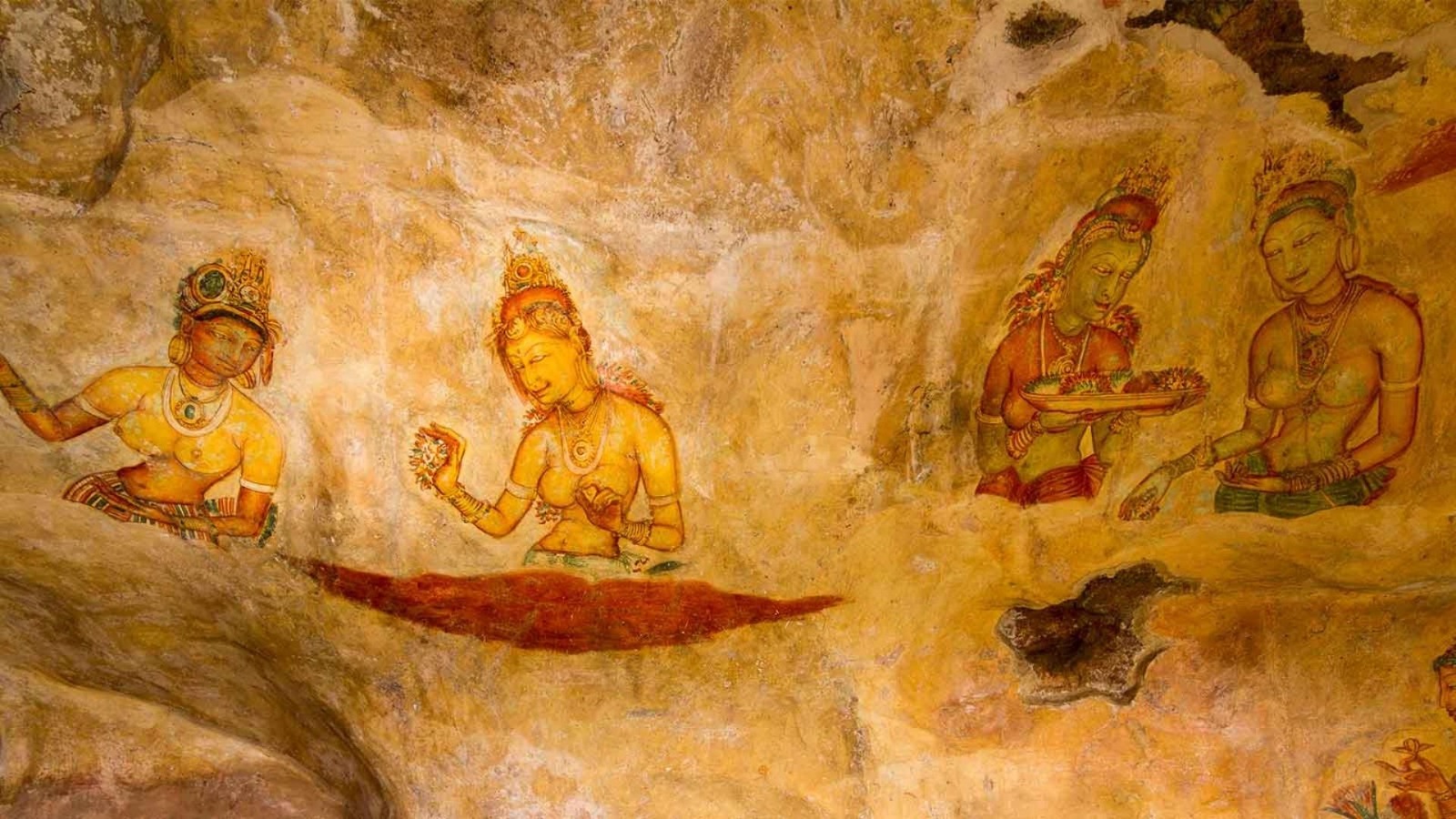
About halfway up the rock face, sheltered within a deep depression, lie the world-renowned Sigiriya frescoes. These stunning ancient paintings are perhaps the most famous and delicate features of the Sigiriya rock fortress, offering a rare glimpse into the artistic traditions of 5th-century Sri Lanka.
Originally, historical records suggest that the entire western face of the rock—an area measuring some 140 meters long and 40 meters high—was covered in a massive mural depicting hundreds of celestial nymphs, or 'Apsaras'. Today, only 21 figures have survived the ravages of time, weather, and later monastic residents who may have removed some of the more secular or provocative imagery to maintain a meditative environment.
The surviving frescoes depict elegant, full-breasted women adorned with intricate jewelry, elaborate headdresses, and carrying flowers. They are painted in vibrant hues of red, yellow, green, and brown, created using natural earth pigments. The figures appear to be emerging from clouds, adding to their ethereal and celestial quality. Scholars debate the identity of these women; some suggest they represent the concubines of King Kashyapa's court, while others argue they are divine Apsaras scattering flowers to bless the king.
To view the frescoes, visitors must ascend a modern spiral staircase enclosed in a wire mesh cage. Photography is strictly prohibited in the fresco cave to protect the ancient pigments from flash damage. The delicate beauty and graceful poses of these figures remain a testament to the extraordinary skill of ancient Sri Lankan artisans.
The Mirror Wall
Just beyond the fresco cave, visitors walk along a pathway bounded by a high, highly polished wall known as the Mirror Wall. Constructed from brick masonry and covered in a specialized, highly buffed plaster, this wall was said to have been polished to such an incredible shine in King Kashyapa's time that the king could see his reflection in it as he walked by.
While the wall's reflective qualities have diminished over the past 1,500 years, it remains a fascinating and historically significant feature of Sigiriya. The true value of the Mirror Wall today lies in the ancient graffiti etched into its surface by visitors who came to marvel at the abandoned fortress between the 6th and 14th centuries.
These inscriptions, etched lightly into the plaster with sharp styluses, include poems, expressions of awe, and commentary on the beauty of the frescoes above. They provide invaluable insights into the development of the Sinhala script and language over time, as well as the thoughts and feelings of ancient tourists. Some poems express deep admiration for the painted maidens, while others lament the ruined state of the once-grand palace.
To preserve this delicate and unique historical record, visitors are strictly forbidden from touching the Mirror Wall. Touching the wall can transfer oils and dirt that degrade the ancient plaster and obscure the invaluable graffiti, which is continuously studied by archaeologists and epigraphers.
Sigiriya Tickets, Entrance Fee & Opening Hours
Visiting Sigiriya is straightforward, but it is important to be aware of the costs and timings to plan your trip effectively. The sigiriya tickets must be purchased at the main entrance gate before you enter the complex. The ticketing office is located near the main car park and the museum.
As of 2026, the sigiriya entrance fee for foreign adult visitors is $36 USD [VERIFY: ticket price]. For children (typically between the ages of 5 and 12), the fee is half price at $18 USD. Citizens of SAARC countries (South Asian Association for Regional Cooperation) often receive a discounted rate upon presenting a valid passport. It is advisable to bring the exact amount in US Dollars or the equivalent in Sri Lankan Rupees, although many ticket counters now accept major credit cards. Ensure you keep your ticket handy, as it will be checked at various points during your ascent.
The sigiriya opening hours are from 6:30 AM to 5:30 PM [VERIFY: opening hours], seven days a week, including public holidays. The last entry to begin the climb is usually permitted around 5:00 PM, but starting this late gives you very little time to explore. The site is managed by the Central Cultural Fund of Sri Lanka, and the revenue from ticket sales goes toward the conservation and maintenance of this world heritage site and others across the island.
Your ticket also includes entry to the Sigiriya Museum, which is highly recommended either before or after your climb. The museum provides excellent context and detailed exhibits on the history, architecture, and excavation of the site, greatly enhancing your understanding of what you are seeing.
Best Time to Climb Sigiriya (Sunrise vs Afternoon)
Timing your visit to Sigiriya is crucial for both comfort and photography. The tropical climate of Sri Lanka means it can get exceptionally hot and humid by mid-morning, making the strenuous climb significantly more challenging.
The most popular and arguably the best time to do the sigiriya climb is early in the morning, arriving at the ticket office precisely when it opens at 6:30 AM. Starting early allows you to ascend before the fierce heat of the day sets in and before the large tourist buses arrive. An early start also offers the magical experience of watching the sigiriya sunrise light up the surrounding jungle and the ancient brickwork. The morning light is soft and golden, perfect for photography, and you will have a more peaceful experience at the summit.
If an early morning is not feasible, the late afternoon (starting around 3:30 PM) is an excellent alternative. By this time, the midday heat begins to dissipate, and the rock face casts long, cooling shadows over the path. The afternoon light casts a warm, dramatic glow over the landscape, and you can stay at the summit to enjoy breathtaking views as the sun begins to lower toward the horizon.
Avoid climbing between 10:00 AM and 2:00 PM if possible. During these hours, the sun is at its peak, there is very little shade on the ascent or at the summit, and the site is at its most crowded, often resulting in slow-moving queues on the narrow staircases.
Sigiriya Museum
Included in the price of your entrance ticket, the Sigiriya Museum is an often-overlooked but essential part of the Sigiriya experience. Located near the main ticket counter, the museum is modern, well-designed, and offers a comprehensive overview of the site's rich history and complex engineering.
The museum features excellent dioramas, 3D models, and interactive exhibits that help bring the ancient fortress to life. It details the prehistoric habitation of the area, the rise and fall of King Kashyapa, and the subsequent use of the site as a Buddhist monastery. One of the highlights is a spectacular scale model of the entire Sigiriya complex, which provides a bird's-eye view of how the royal gardens, the moat, and the palace were ingeniously laid out.
Additionally, the museum houses a vast collection of artifacts unearthed during archaeological excavations, including ancient tools, jewelry, pottery, and coins. There is also a dedicated section that recreates the Sigiriya frescoes, allowing you to study their details up close without the restrictions of the actual fresco cave on the rock.
Many travelers debate whether to visit the museum before or after the climb. Visiting before provides valuable context and helps you understand the ruins you will see on the rock. However, if you are rushing to beat the crowds and the heat early in the morning, it is perfectly fine to do the climb first and explore the air-conditioned museum at your leisure afterward.
Sigiriya vs Pidurangala Rock
A common dilemma for travelers visiting the area is deciding whether to climb Sigiriya Lion Rock or its neighboring counterpart, Pidurangala Rock. Both offer unique experiences, and if you have the time and energy, climbing both is highly recommended.
Sigiriya is the main event. It is a world-class archaeological site with incredible ruins, the famous frescoes, the Mirror Wall, and the majestic Lion's Paws. It offers a deep dive into Sri Lankan history and ancient architecture. However, it is also the more expensive option ($36 USD) and can get very crowded. The paths are well-maintained, and the ascent is mostly via constructed stairs.
Pidurangala Rock, located just a few kilometers north of Sigiriya, offers a completely different experience. It is much cheaper to enter (around $3-4 USD) and significantly less crowded. The climb is rougher and more adventurous, involving some boulder scrambling near the top. The summit of Pidurangala is expansive and relatively flat, but the main draw is the unparalleled, panoramic view it offers of Sigiriya rock itself. Seeing the massive monolith of Sigiriya rising from the jungle from the vantage point of Pidurangala is a view you will never forget.
For the ultimate experience, many travelers choose to hike Pidurangala for sunrise to watch the first light hit Sigiriya, and then tackle the historical Sigiriya climb the following morning, or vice versa. If you must choose only one, pick Sigiriya for history and archaeology, or Pidurangala for adventure, budget travel, and the best view of the Lion Rock.
How to Get to Sigiriya
Getting to Sigiriya is relatively straightforward from most major tourist hubs in Sri Lanka. The most convenient and comfortable way to travel is by hiring a private driver or taking a taxi. This allows for door-to-door service, air conditioning, and the flexibility to stop at other sights along the way. From Colombo or the airport, a private taxi takes about 4 hours. From Kandy, the drive is approximately 2.5 hours.
For budget-conscious travelers, public transportation is a viable option. You can take a bus from Colombo (Pettah bus stand) or Kandy heading toward Dambulla or Anuradhapura, and get off at Dambulla. Dambulla is the main transport hub for the region. From Dambulla, you can catch a local bus to Sigiriya (which takes about 45 minutes and runs frequently) or hire a tuk-tuk for a quicker, more direct ride directly to your accommodation.
There is no direct train station in Sigiriya or Dambulla. The closest major train station is in Habarana, about 15 kilometers away. You can take a train from Colombo to Habarana and then hire a taxi or tuk-tuk for the final leg of the journey to Sigiriya.
Once you are in the Sigiriya area, getting around is easy. The village is small and easily navigable by walking or cycling. Bicycles are widely available for rent at guesthouses. For longer distances, such as traveling to Pidurangala or Dambulla, local tuk-tuks are ubiquitous, affordable, and a fun way to experience the local scenery.
Places to Visit Near Sigiriya
Sigiriya serves as an excellent base for exploring the wider Cultural Triangle of Sri Lanka. Beyond the Lion Rock and Pidurangala, there are several remarkable places to visit near Sigiriya that should not be missed.
The Dambulla Cave Temple, located just 30 minutes away, is another UNESCO World Heritage site. This spectacular complex features five cave sanctuaries adorned with magnificent Buddhist mural paintings and hundreds of statues of Lord Buddha, set beneath a massive rock overhang. It is deeply spiritual and visually stunning.
For wildlife enthusiasts, Minneriya National Park and Kaudulla National Park are a short drive from Sigiriya. These parks are famous for the 'Elephant Gathering', an annual event during the dry season (July to October) where hundreds of wild elephants congregate around the reservoirs to drink and feed on the fresh grass. A jeep safari here is an unforgettable experience.
Further afield, but easily doable as a day trip from Sigiriya, is the ancient ruined city of Polonnaruwa. Rent a bicycle and spend the day exploring the well-preserved stupas, royal palaces, and the stunning Gal Vihara—a group of colossal Buddha statues carved directly into a granite rock face. Polonnaruwa offers a fascinating look into Sri Lanka's medieval kingdom.
Sigiriya FAQs
To help you finalize your plans, here are answers to some of the most frequently asked questions about visiting Sigiriya Lion Rock.
Need a Ride?
Planning your trip to Sigiriya? Book a comfortable, air-conditioned private transfer with our experienced drivers. We offer direct routes from Colombo, Kandy, and the airport right to your hotel in Sigiriya. Book a driver for this trip.
Frequently Asked Questions
Q:How long does it take to climb Sigiriya?
It typically takes about 45 minutes to 1 hour to reach the summit, depending on your fitness and the crowds. Allow 3 to 4 hours for the entire visit, including the descent and exploring the gardens.
Q:Is the Sigiriya climb difficult?
The climb is of moderate difficulty. There are about 1,200 steps. While the lower sections are easy, the final ascent involves steep metal staircases that can be challenging for those with a fear of heights.
Q:What is the Sigiriya entrance fee in 2026?
The entrance fee for foreign adults is $36 USD. Children pay half price, and there are discounts for SAARC country passport holders.
Q:Can I buy Sigiriya tickets online?
Currently, tickets are primarily sold at the main entrance gate on-site. It's best to bring exact cash in USD or LKR, though credit cards are increasingly accepted.
Q:When are the Sigiriya opening hours?
Sigiriya is open daily from 6:30 AM to 5:30 PM. Last entry is usually around 5:00 PM, but arriving early morning is highly recommended.
Q:Are there toilets at the top of Sigiriya?
No, there are no toilet facilities on the rock itself. Be sure to use the restrooms near the ticket office and main entrance before you begin your climb.
Q:Can I fly a drone at Sigiriya?
No, flying drones is strictly prohibited in and around the Sigiriya complex for security and conservation reasons.
Need Help Planning or Adjusting Your Route?
Our professional English-speaking tourism chauffeurs monitor local road situations, safari gates, and weather conditions across Sri Lanka daily. Speak directly with our dispatch desk on WhatsApp for free itinerary advice or fixed-rate cab transfers.